
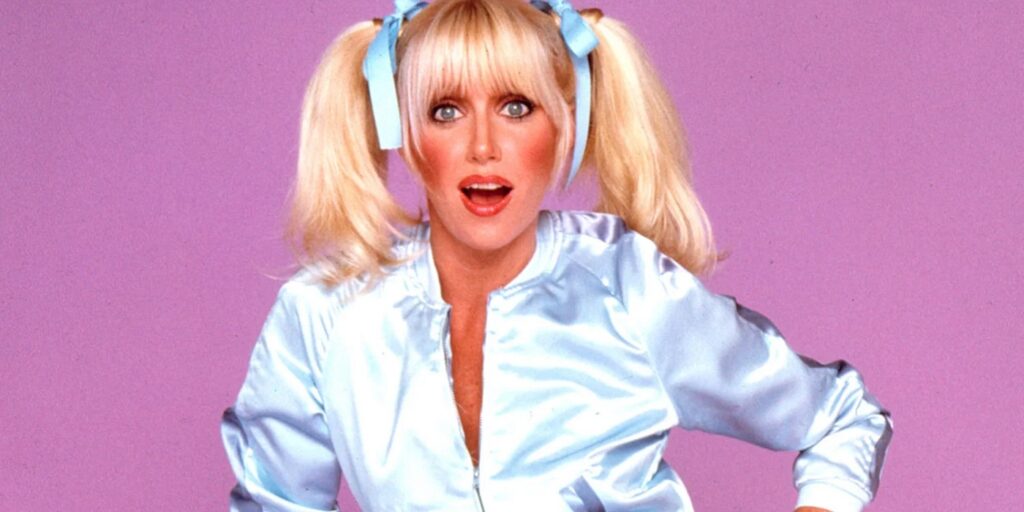
Today, learn how the crew members of Three’s Company expressed their displeasure with Suzanne Somers when she left the hit TV series.
TV URBAN LEGEND: The crew of Three’s Company held a fake “funeral” for Suzanne Somers when the actor was officially off of the show following a failed pay dispute with the show’s producers.
As the famous saying goes, “History is written by the victors” (and, of course, the amusing thing about the quote is that it is most often attributed to Winston Churchill, the Prime Minister of England during one of the biggest victories of the 20th Century, and thus history has been written in such a way that Churchill gets credited a lot of clever quotes he didn’t actually coin), and that is as true with entertainment conflicts as it with military ones. For instance, in the case of salary disputes between an actor and the producers of a TV show, whoever comes out more successful after the dispute is generally seen as the “right” one in the dispute, whether that was the truth of the incident or not.
In this instance, we’re looking at Suzanne Somers’ controversial exit from Three’s Company. Whether she was right or wrong in the long run, in the short term, everyone turned on her but good, including the crew of the show, leading to a dark prank.
Suzanne Somers, of course, was one third of the hit sitcom, Three’s Company, about a young man who becomes roommates with two single young women in Santa Monica, California. The curmudgeonly old landlord only allows this arrangement to happen because the roommates lie and say that the young man is gay. Alongside John Ritter as Jack Tripper, the young man, and Joyce DeWitt as Janet Wood, one of the two female roommates, Somers played Christmas “Chrissy” Snow, the adorably naive but gorgeous blonde roommate.
Despite being the least experienced of the original leads, Somers’ Chrissy was becoming a major figure in popular culture. In 1978, the cast was featured on the cover of Newsweek for an article about sex on TV and while the producers knew that the photoshoot would spotlight Somers specifically, Ritter and DeWitt were not informed until the shoot began. The resulting cover was a bit of a sensation at the time, and Somers always believed it led to a slightly cooler reaction from Ritter and DeWitt to her after that.
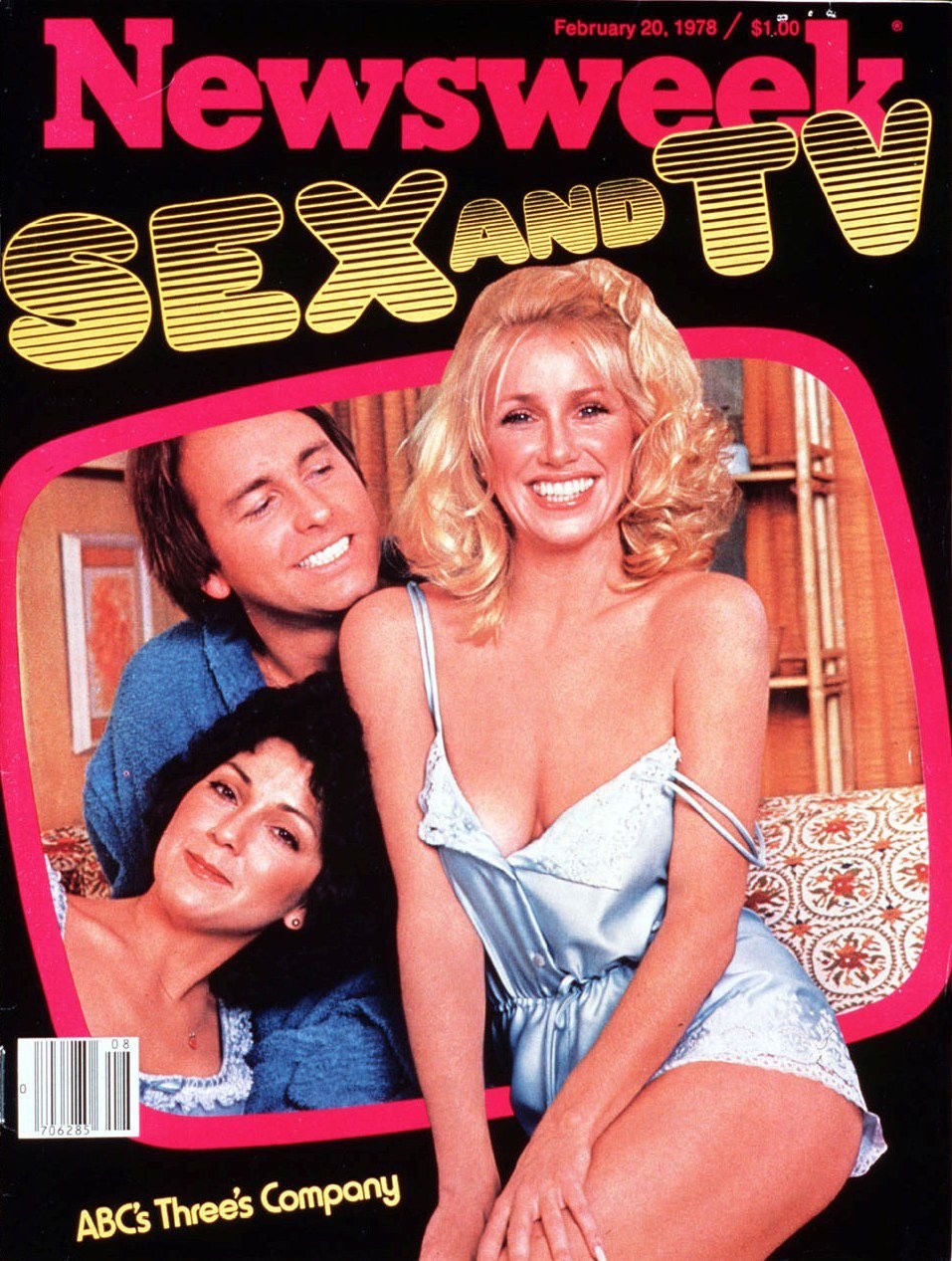
threes-company-newsweekBefore the fifth season began, her new manager (who was also her husband) tried to get Somers pay equity with Ritter. The producers offered her a small raise, arguing that Ritter’s deal specifically promised him the most out of all the cast members and that DeWitt’s deal promised her the same money that Somers made, so by giving Somers a small raise, they were also going to be giving DeWitt that same small raise.
Here’s where you get into a case of “Who was right?” as, well, Somers WAS a huge star at the time, and a big part of why the show was so successful. Was it really unfair that she be paid closer to what Ritter was making? The producers, on the other hand, felt that Ritter was really the show, as the show revolved around the young man, not the women, and that Somers was ultimately replaceable. In the end, the show DID replace Somers, and it remained popular for a few more years before falling apart in its final season, but falling apart eight seasons in isn’t exactly a sign of anything, as most shows have trouble then.
The cast and the crew of the show, though, really disliked that Somers and her husband tried to play games, like calling out sick right before the taping of an episode. Ritter, in particular, was furious with Somers, and DeWitt wasn’t too happy, either (note that Somers wasn’t looking for all three to get paid the same, just her and Ritter). Ritter felt that you should just do your job and leave the negotiations to the agents. But, of course, he had the privilege to say that as the highest-paid member of the cast. In any event, the main thing to remember is that the cast and crew were all displeased with Somers.
Eventually, a compromise was reached where Somers would get paid her old rate for the rest of the season, but she would only appear in minute-long bits at the end, where Chrissy would appear in small bits where she would call in while visiting her parents, those scenes would be filmed separately from the rest of the cast.
So she did those seven camoes, each one spread out a bit, with her final one occurring in the seventeenth episode Season 5 (which had 22 episodes). In Episode 20, “Dying to Meet You,” Jack has to fake his death to avoid being killed by a jealous boyfriend of a girl he was flirting with at the Regal Beagle.
Ritter did shtick in a coffin, like sneezing when he is allergic to flowers someone brought, stuff like that…
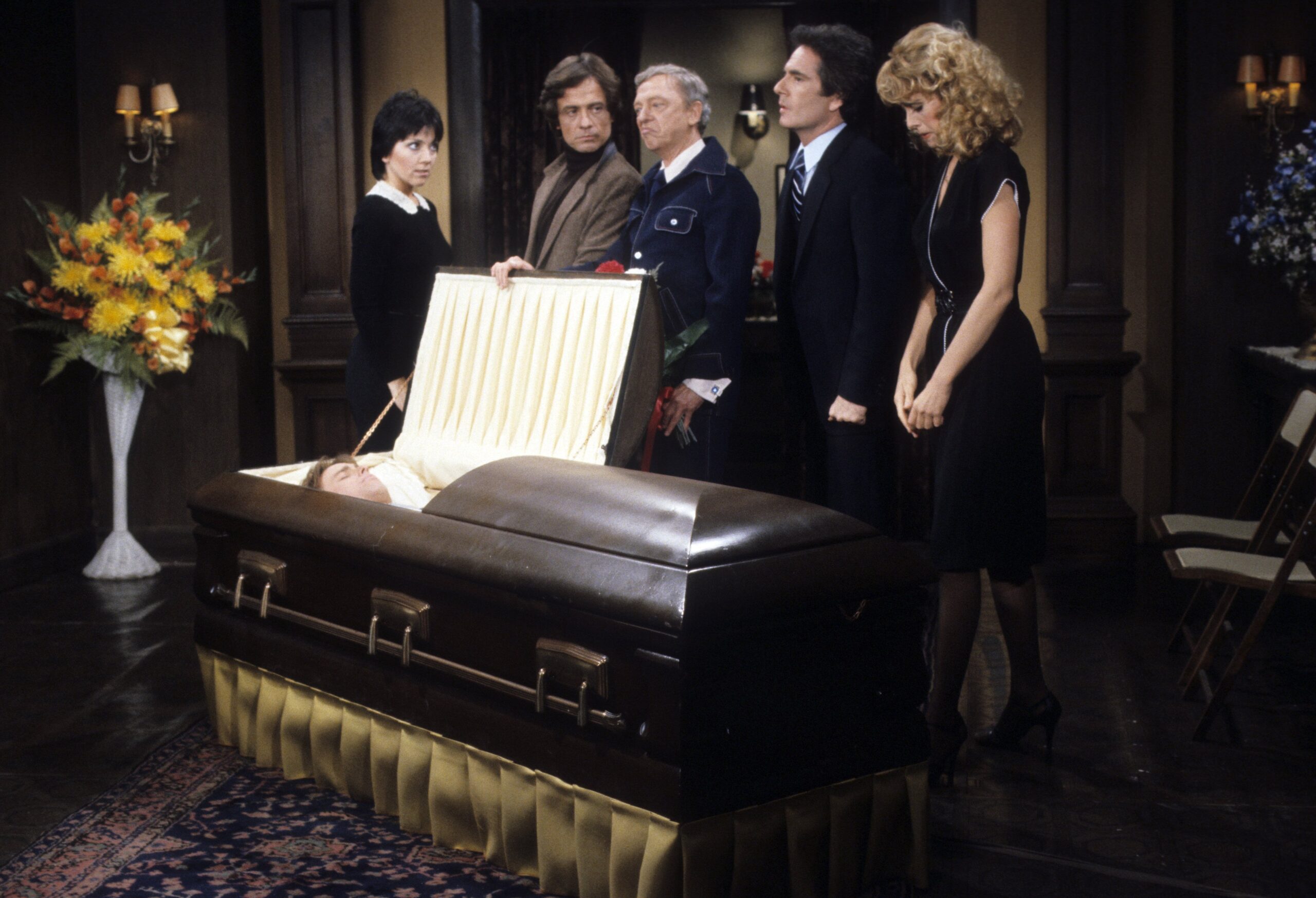
Well, Chrissy had a very distinctive side ponytail that she wore in the later seasons of her stint on the series…
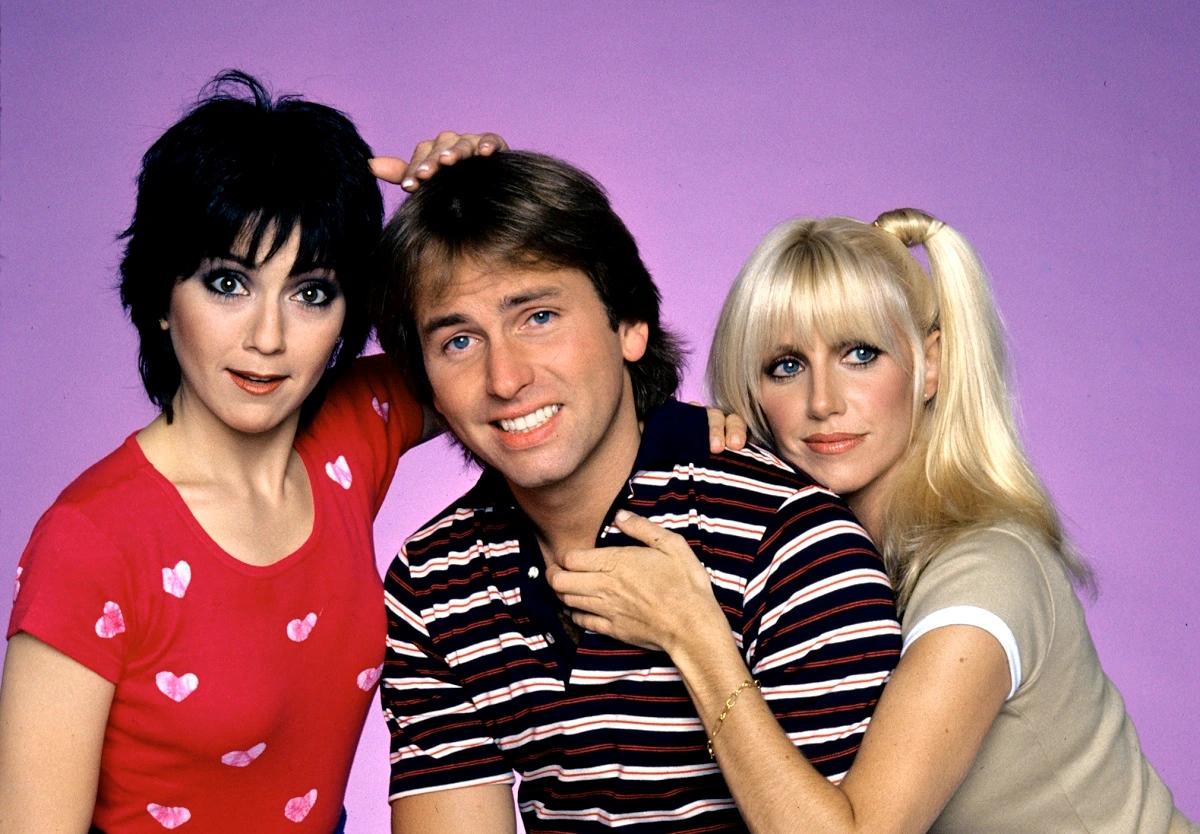
So, after the episode was wrapped, the crew then revealed the coffin, with a blonde side ponytail sticking out! DeWitt, Jenilee Harrison (who played Chrissy’s original replacement, Chrissy’s cousin, Cindy Snow) and Richard Kline (the sleazy neighbor to the gang, Larry) all confirmed the story while appearing on the podcast of Priscilla Barnes (the final replacement for Chrissy) during the 40th anniversary of Three’s Company a few years back (they had all appeared on a reunion TV special, so went on to her show afterwards). .
The legend is…
STATUS: True
Be sure to check out my archive of TV Legends Revealed for more urban legends about the world of TV.
Feel free (heck, I implore you!) to write in with your suggestions for future installments! My e-mail address is brian@poprefs.com








Social commentary often discusses issues people face in life, such as fear, loneliness, and psychological pressure. Freddy can be seen as a symbol of the invisible fears we often try to deny. Freddy represents the feeling of being watched and powerless in the face of unseen threats.
Bookmarking “Did the Crew of Three's Company Hold a 'Funeral' for Suzanne Somers?” for the section that shows what to do when the usual approach fails. https://musik.tools/es
A fake funeral by the Three’s Company crew is a wild story, and the Churchill quote aside is great. TV moments like this would be perfect meme material today, and people now even turn their own photos into short clips with the Crazy Frog AI video trend.
The point about the Newsweek cover being the likely source of the cast’s cooler reaction is interesting, since it frames the pay dispute as building on earlier resentment rather than starting it. One practical step when checking this kind of story: look for contemporaneous trade-press coverage from 1980 and 1981, like Variety or TV Guide archives, to see whether the funeral prank was reported at the time or only surfaced later in retellings. That timing would help separate documented events from embellished legend.
The point about the producers citing DeWitt’s contract parity as a reason to limit Somers’ raise is the part worth pausing on, since it frames a pay dispute as fairness to a third party. A practical step when checking this legend: find contemporaneous trade-press coverage from 1980 or 1981 that describes the actual on-set reaction, rather than relying on later retellings, and note whether the funeral story appears in a primary source or only in Somers’ own later accounts.
The point about the Newsweek cover being arranged without Ritter and DeWitt knowing until the shoot is the part that sticks with me, since it explains how a publicity decision can sour a cast long before any money talks started. A practical step for anyone reading up on this dispute: check the timeline of contract negotiations against the production calendar, because the season five start date shapes what leverage each side actually had. Doing that makes the pay-equity argument easier to judge fairly.