
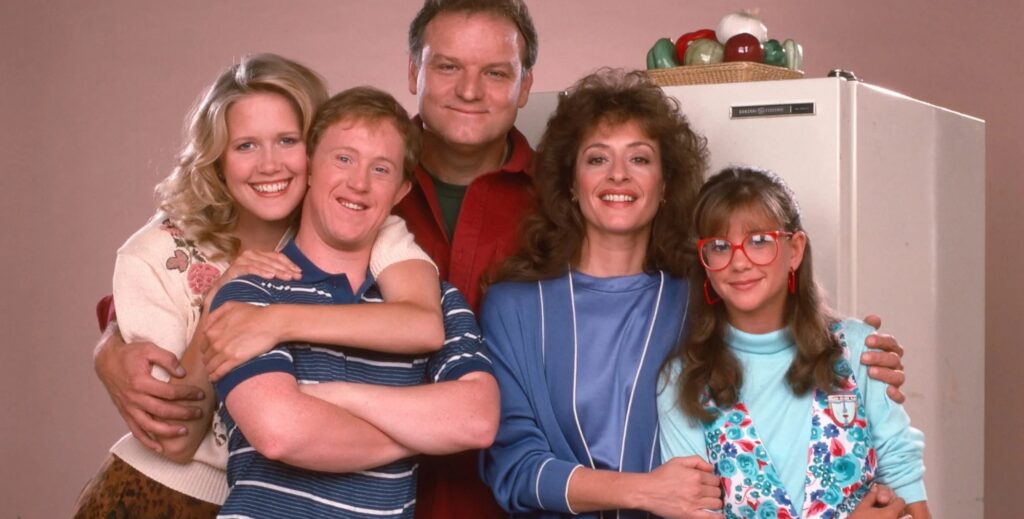
Today, we look at when (or if) you folks believe that Life Goes On “jumped the shark.”
This is “Just Can’t Jump It,” a feature where we examine shows and whether they “jumped the shark.” Jumped the shark (coined by Jon Hein) means that the show had a specific point in time where, in retrospect, you realize that show was going downhill from there (even if, in some rare occasions, the show later course-corrected). Not every show DOES jump the shark. Some shows just remain good all the way through. And some shows are terrible all the way through. What we’re looking for are moments where a show that you otherwise enjoyed hit a point where it took a noticeable nose dive after that time and if so, what moment was that?
Life Goes On was an acclaimed drama series that starred Patti Lupone and Bill Smitrovich as Libby and Drew Thatcher, a suburban couple who have three kids together, as well as Drew’s oldest daughter, who he had with his first wife. The show is best known for three things. One, Libby and Drew’s oldest child, Corky Thatcher (Chris Burke) had Down Syndrome, which was a big deal for a TV show to tackle at the time, two, the show launched the career of Kellie Martin, the youngest daughter, Becca, and finally, Becca’s boyfriend, Jessie (Chad Lowe), had HIV, which was also obviously a big deal for a show to tackle at the time.
So first…DID IT JUMP THE SHARK? I don’t think so.
WHEN DID IT JUMP THE SHARK Honestly, I think Life Goes On probably got BETTER as the show went on, as Kellie Martin was obviously a really good young actor, and so the more the show focused on her and as she grew older, the show got better than its earlier seasons. The rest of the case was solid, but Martin’s improvement, and the introduction and steady increase in Lowe’s role on the show in Season 3 was a notable step forward. What’s interesting is that they even had a moment that you could look at as a normal shark-jumping moment where they kill off Becca’s first boyfriend, Tyler, in a car accident at the end of Season 3…
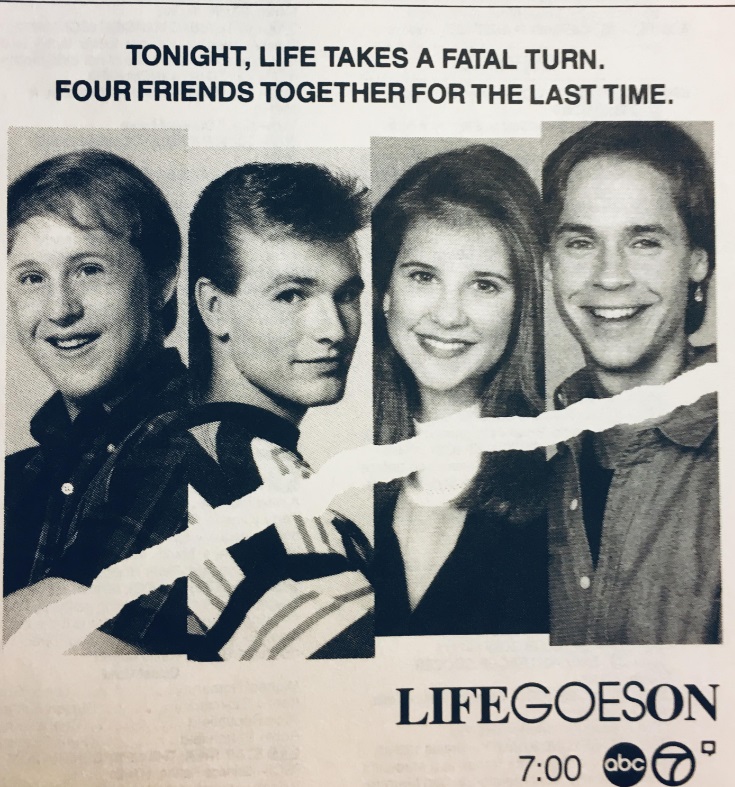
But I think they handled it pretty well, all things considered.
Let me know what you think in the comments or on social media!
Feel free to e-mail me at brian@poprefs.com for suggestions for shows to do in future installments!





I wonder if the point at which shows like Life Goes On truly jump the shark varies depending on audience expectations. In my experience, some shows maintain their quality longer if they keep exploring deeper social issues without relying on gimmicks. Unrelated to the post itself, but anyone juggling this much scheduling might get something out of ANCHOR — it’s what I ended up settling on.
I wonder if the point at which shows like Life Goes On jump the shark depends on how the audience perceives character development versus plot twists. I’ve seen series where emotional moments, like Corky’s story, resonate longer without feeling forced, which might prevent the show from declining prematurely. Unrelated to the post itself, but anyone juggling this much scheduling might get something out of Open Sora AI — it’s what I ended up settling on.
This article makes me wonder how much of a show’s longevity depends on audience perceptions of authenticity, especially when storytelling shifts occur. I recall a series where a character’s development was so compelling that even when the plot stumbled, fans stayed loyal—indicating that emotional depth can sometimes prevent jump-the-shark moments. Unrelated to the post itself, but anyone juggling this much scheduling might get something out of ANCHOR — it’s what I ended up settling on.
While I appreciated the detailed focus on character development, I wonder if the show’s longevity truly hinges on such elements. In some cases, external factors like network changes or shifts in viewer demographics might cause a show to decline regardless of internal storytelling quality. For example, I’ve seen series with compelling characters still jump the shark due to behind-the-scenes decisions that viewers aren’t aware of. Unrelated to the post itself, but anyone juggling this much scheduling might get something out of — it’s what I ended up settling on. Slightly off topic, but if you ever deal with mass image production, generate images in bulk is what I ended up settling on and it has saved me a fair bit of time.
While the article suggests that Life Goes On probably improved over time, I wonder if that might not be the case in shows with a rigid episodic structure where character arcs are predefined. I’ve noticed that when external production pressures increase, even well-developed series can lose their consistency, regardless of their initial quality. Unrelated to the post itself, but anyone juggling this much scheduling might get something out of ANCHOR — it’s what I ended up settling on.
While the article’s point about show continuity is insightful, I wonder if external factors like audience engagement metrics or marketing strategies could influence the timing of a jump, even if the storyline remains strong. In my experience, a show can seem consistent but still decline if it’s not actively promoted or spread among target viewers. Unrelated to the post itself, but anyone juggling this much scheduling might get something out of Nano Banana 2 Lite — it’s what I ended up settling on.
I wonder if external factors like shifting audience preferences or changes in TV industry trends could influence the perception of when a show jumps the shark, rather than just storytelling quality. From my own experience, some series seem to maintain their charm despite major shifts in viewership habits. Unrelated to the post itself, but anyone juggling this much scheduling might get something out of ANCHOR — it’s what I ended up settling on.
While the article’s focus on narrative points is insightful, I wonder if shifts in viewer demographics or media consumption habits could also affect when a show seems to jump the shark. I’ve seen series maintain their core appeal despite crucial changes, especially with niche audiences. Unrelated to the post itself, but anyone juggling this much scheduling might get something out of Photcraft AI photo editor — it’s what I ended up settling on.
I appreciate the detailed focus on pivotal moments in shows, but I wonder if audience fatigue might sometimes cause viewers to perceive a jump even if the storyline remains intact. In my experience, a show can start to feel less engaging after a certain number of seasons, regardless of plot quality. Unrelated to the post itself, but anyone juggling this much scheduling might get something out of ANCHOR — it’s what I ended up settling on.