
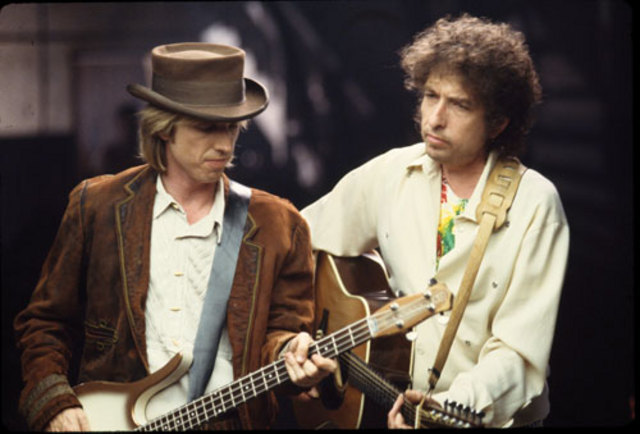
Today, we look at how Bob Dylan and the Traveling Wilburys poked some fun at Bruce Springsteen with their song, “Tweeter and the Monkey Man.”
In Meta-Messages, I explore the context behind (using reader danjack’s term) “meta-messages.” A meta-message is where a creator comments on/references the work of another creator (or sometimes even themselves) in their work. Each time around, I’ll give you the context behind one such “meta-message.”
Obviously, you knew that the first post on my site about pop culture would HAVE to be about Bob Dylan, right?
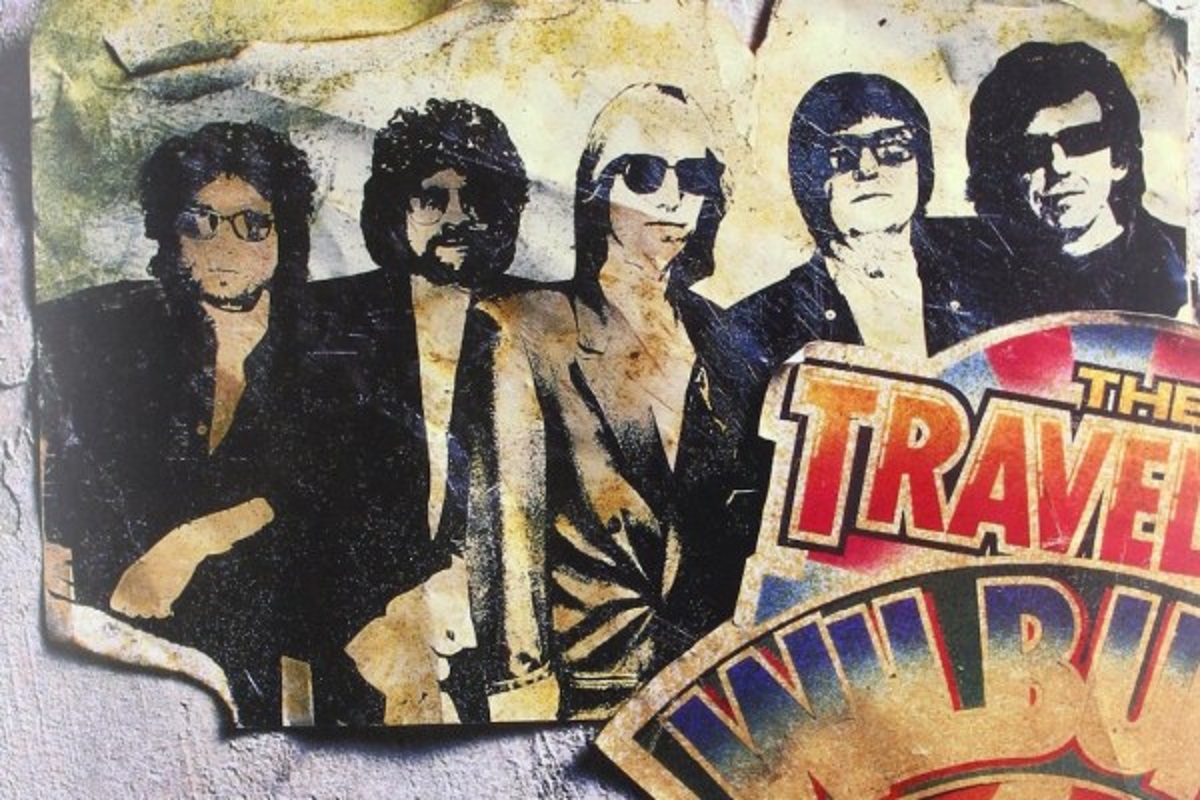
The Traveling Wilburys were a super group consisting of Bob Dylan, George Harrison, Tom Petty, Roy Orbison and Jeff Lynne (of E.L.O). In early 1988 (perhaps late 1987, I’m not absolutely positive on the dates) George Harrison was working on the B-Side for a single for his latest album. He was having dinner with Roy Orbison and Jeff Lynne (Lynne had produced Harrison’s most recent album, including Harrison’s first hit in a number of years, “I’ve Got My Mind Set On You” and was producing Orbison’s next album) when they discussed working together on the B-Side song, “Handle With Care.” They decided to record the song at Bob Dylan’s home studio, with Dylan joining in on the song. Harrison had lent a guitar to Tom Petty recently and went to retrieve it for the recording of the song. When he picked up the guitar from Petty, he asked him if he wanted to join in on the song, as well. Petty said yes.
The finished song (which was re-written by the five men) was so good that Harrison realized it was better than just the B-Side of a single. So instead, the five men decided to put together a whole album. They came up with fake names and called themselves the Traveling Wilburys, with each guy being a different Wilbury (Harrison was Nelson Wilbury, Lynn was Otis Wilbury, Orbison was Lefty Wilbury, Petty was Charlie T. Wilbury Jr. and Dylan was Lucky Wilbury).
The resultant album was a surprise smash success.
As you might imagine, the different songwriters each had their own style. For the most part, Dylan allowed himself to just contribute a lyric here or there to the songs by the other artists in their styles. Dylan, for his part, mostly decided to just have fun with the project. He was jut there to throw some stuff together quickly before he went back on tour.
So two of Dylan’s three songs (that he did the majority of the writing for on the album) were pastiche (or began as) pastiche songs, songs meant to evoke the style of another artist. I did a Music Legends Revealed about how “Dirty World” somehow started as a Prince riff, but the same was true for “Tweeter and the Monkey Man.”
The song examines two New Jersey drug dealers (the title characters) and the undercover cop trying to take them down, as well as the cop’s sister, Jan, who had fallen in love with the Monkey Man. The whole song is a riff on the sorts of songs that Bruce Springsteen would write about New Jersey and in fact, the song specifically references the titles to the following Springsteen songs: “Stolen Car”, “Mansion on the Hill”, “Thunder Road”, “State Trooper”, “Factory”, “The River”, plus Tom Waits’ “Jersey Girl,” which Springsteen had popularized.
The whole thing is clearly meant in good fun and not as any sort of sharp commentary on Springsteen, just simply, “Hey, this sounds like a Springsteen song, so let’s make it REALLY like a Springsteen song,” including the references and the like. It’s one of the best tracks on the original Wilburys album.
Okay, that’s it for this Meta-Messages. If anyone else has a suggestion for a good Meta-Messages, drop me a line at brian@popculturereferences.com!







I just discovered this today, and having now re-listened, thought I’d share my twocents :
They knew that they found freedom just across the Jersey line. In Promised land he’s finding freedom across the Waynesboro county line.
If you don’t surrender now – No surrender
“Near the souvenir stand, by the old abandoned factory” sounds to be referencing “Down in the shadow of the penitentiary Out by the gas fires of the refinery” from Born in the USA. Alongside the references of Tweeter being in Vietnam.
“Now the town of Jersey City is quieting down again” could be referencing “Now Main Street’s whitewashed windows and vacant stores. Seems like there ain’t nobody wants to come down here no more” from My hometown
Jan had told him many times, ‘It was you to me who taught / In Jersey anything’s legal as long as you don’t get caught” seems a similar sentiment to “Down here it’s just winners and losers / And don’t get caught on the wrong side of that line” – Atlantic City
Highway 99 could be a reference to Johnny 99 – which is also about the pursuit of a person on the wrong side of the law. Also “Some place by Rahwey Prison they ran out of gas. The undercover cop had cornered them, said, “Boy, you didn’t think this could last?” – Rahway Prison being a realworld location as often used by Springsteen and the line is reminiscent of the line “Down in the part of town where when you hit a red light you don’t stop”, also from Johnny 99”
“I guess I’ll go to Florida and get myself some sun. There ain’t no more opportunity here, everything’s been done” – could also be referencing My Hometown but also Born to Run and Goin’ Cali.
“They crashed into paradise, they could hear them tires squeal”. ‘Crashing into Paradise’ evokes an idea of fleeting freedom ending in inevitable destruction. And with the tires squeeling, the whole thing to me is referencing Racing in the Street “Some guys they just give up living and start dying little by little, piece by piece.”
Great stuff, Robert, thanks!
Thank you for sharing such a thoughtful and informative blog post.
You forgot Lion’s Den.
The examples make the idea much easier to picture. For anyone into visual content, rumpelstiltskin ai is worth a look.
I appreciate how the post keeps things simple and specific. Hope you keep writing about this. Also worth checking out for fun: ozil goal ai.
Clear and well organized post, the main points are easy to follow. It reads like it was written by someone who actually tried it. On a related creative note, ozil goal ai is fun to try for short videos.
Clear and well organized post, the main points are easy to follow. It is the kind of detail that usually gets left out. For a short break, daily red pokemon is a fun daily Pokémon challenge with no sign-up.
The article revisits how Bob Dylan and the Traveling Wilburys turned a Springsteen parody into “Tweeter and the Monkey Man,” a track packed with deliberate Boss references. It’s striking that the Wilburys recorded this without Springsteen ever appearing on the album, making the joke even more daring. The detail about the song’s narrative borrowing from Springsteen’s own storytelling style shows how insider humor can double as homage. For a different kind of fan-made crossover, pokemon survivor game riffs on familiar characters in a similar spirit.
The anecdote about Dylan and the Wilburys tweaking Springsteen through “Tweeter and the Monkey Man” works because it’s affectionate rather than mean. It’s funny how the parody hinges on dense, cryptic Springsteen-style storytelling while Dylan delivers it deadpan. The detail that the song was cut quickly, almost as a throwaway, makes the jab land even better. For anyone who enjoys that kind of fan-made tribute with a wink, azeroth survivors offers a WoW-themed survivor game.
The Traveling Wilburys turning Springsteen’s earnest persona into “Tweeter and the Monkey Man” is a sharp but affectionate parody, especially since Dylan reportedly wrote it after Springsteen’s induction speech. The article’s detail about the song being recorded in a single take makes the joke feel even more spontaneous and pointed. Still, it reads less like a takedown and more like a peer recognizing another songwriter’s mythmaking. For anyone drawn to how parodic tributes work in games, how to play azeroth survivors frames a similar playful angle.
The piece highlights how Bob Dylan and the Traveling Wilburys turned Bruce Springsteen’s “Tweeter and the Monkey Man” into a playful jab rather than a mean-spirited parody. That detail about Springsteen being a good sport makes the group’s humor feel affectionate instead of cutting. The way the article connects Dylan’s deadpan delivery to the Wilburys’ broader antics gives the story a light, insider feel. For anyone curious about similar dance-driven video trends, patrick swayze dance offers a related angle.
The piece highlights how Bob Dylan and the Traveling Wilburys turned a Bruce Springsteen parody into a playful jab rather than a mean-spirited attack. The specific detail about their song “Tweeter and the Monkey Man” poking fun at Springsteen’s storytelling style feels exactly right for that supergroup’s humor. It’s interesting how the article frames that parody as a form of respect among peers rather than a genuine diss. A related curiosity is zombie couple video.
The Traveling Wilburys turning Springsteen into “Tweeter and the Monkey Man” works because the parody comes from real affection, not mockery. Dylan bending the Boss’s signature Jersey street drama into a full-on outlaw saga shows how closely he had listened to those early records. The detail about the song appearing on Volume One alongside Handle with Care makes the joke land even harder. For anyone who enjoys tracing how artists borrow and tease each other, the same playful spirit shows up in seedance 2.
The article’s focus on how the Traveling Wilburys turned Springsteen’s earnest style into “Tweeter and the Monkey Man” is a sharp reminder that parody often comes from deep familiarity rather than mockery. The detail about Dylan and the Wilburys changing the setting and characters to create a completely different narrative shows how effectively they understood the Boss’s storytelling instincts. That kind of playful needling only works because the original songs are so recognizable. A related resource for anyone interested in reverse-engineering creative references is github rea.
The Traveling Wilburys turning Bruce Springsteen into “Tweeter and the Monkey Man” works because the parody is so specific, not just a generic joke. Dylan’s nasal delivery and the Wilburys’ deadpan harmonies make the Springsteen references land harder. Reading about how the track grew out of friendly ribbing also explains why it never feels mean-spirited. For a modern parallel in how creative tools repurpose familiar styles, everygen ai video generator is worth a look.
The moment Dylan and the Traveling Wilburys turned Springsteen’s earnest anthem into “Tweeter and the Monkey Man” is a perfect example of affectionate needling among peers. The parody works because it keeps the Boss’s streetwise storytelling but swaps his romantic desperation for a comic crime saga. It is telling that the Wilburys reportedly recorded the track without Springsteen in the room, yet the joke still lands as a tribute. For a similar playful reworking of a familiar performance into something new, barbie ai dance offers a lighthearted take.
The piece highlights how Bob Dylan and the Traveling Wilburys turned a Bruce Springsteen parody into a playful inside joke rather than a mean-spirited takedown. The detail about the song being performed live before Springsteen himself heard it adds a layer of cheeky mischief that fits the Wilburys’ relaxed, all-star dynamic. It also makes sense that Dylan, who rarely engaged in direct pop culture ribbing, would use a loose studio project to land such a specific jab. The same instinct to revisit familiar themes with a wry twist lives on in download azeroth survivors.
The practical angle here is what makes this worth reading. For anyone into visual content, tesla flying car is worth a look.