
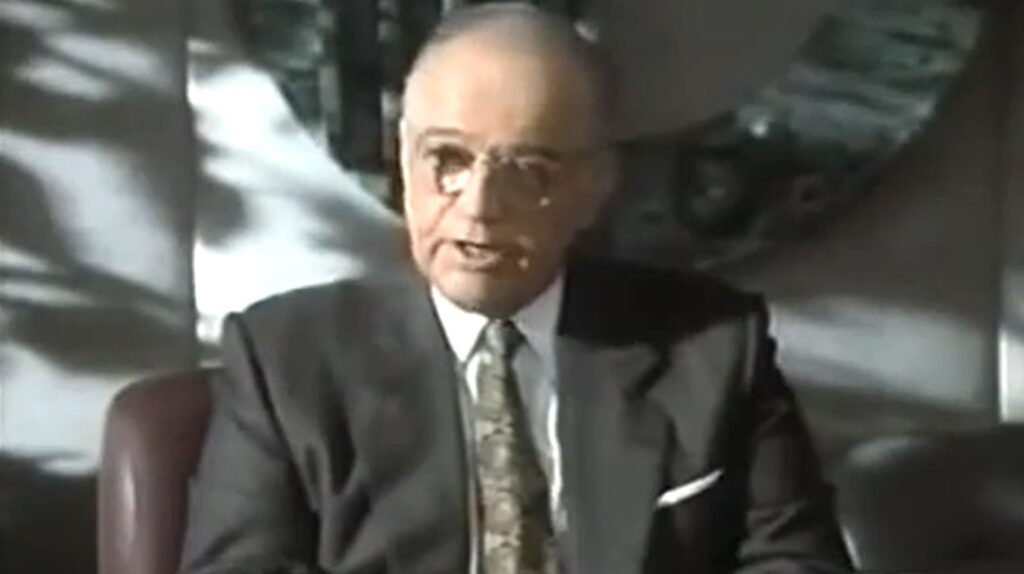
Today, we look at the episode of L.A. Law where a new showrunner tried to right the series by first tearing apart the plots of the departing showrunners.
In Meta-Messages, I explore the context behind (using reader danjack’s term) “meta-messages.” A meta-message is where a creator comments on/references the work of another creator (or sometimes even themselves) in their work. Each time around, I’ll give you the context behind one such “meta-message.”
L.A. Law was an unusual TV series in that its most iconic showrunner, David E. Kelley, was not its FIRST showrunner (that’s not a bad idea for a Drawing Crazy Patterns, right? I don’t know if I can think of five examples, but I know Michael Piller of Star Trek: The Next Generation fame would be another notable example). It’s not that the show wasn’t already acclaimed before Kelley took over, as Stephen Bochco, the show’s co-creator (with Terry Louise Fisher, who co-ran the show in Season 1 before Bochco pushed her out), ran the show to two Best Drama Series Emmys for Seasons 1 and 3. However, it’s probably a bit of a stretch to call Bochco the showrunner for Season 3, as Kelley wrote 11 of the season’s 19 episodes, including 7 of the last 8 episodes. In other words, it was clear that Kelley was the main creative mind for the series in Season 3, and he officially took over in Season 4, and then won two more Best Drama Emmys for Seasons 4 and 5 before leaving to for him own production company as part of a deal with CBS. The first series out of the deal, Picket Fences, would debut in 1992.
1991-92’s Season 6 is fascinating because it wasn’t good, but it was running high off of Kelley’s great Season 5, so it still garnered a nomination for Best Drama despite, again, not being very good at all. It was a real shame, since Patricia Green had worked extensively with David E. Kelley in Season 5 before taking over for Season 6, but she just fell flat. She was quoted at the time, “if people are going to insist on comparing us with David, it’s going to be hard.” That’s not unfair, I guess, but, I mean, it’s not what you want to hear, right?
Things were so bad that Green was relieved of her duties before Season 6 even finished, with Kelley and Bochco returning as consultants to finish out Season 6.
For Season 7, former St. Elsewhere showrunners John Masius and John Tinker took over (I did a Meta-Messages earlier this month about their first episode) and, well, it made Patricia Green’s previous season seem like peak drama by comparison’s sake. It was BAD. Like, REALLY bad. The sort of thing where you couldn’t believe that this was the same show that literally won a Best Drama Emmy just two seasons earlier.
So once again, midseason, a showrunner change was made. This time, William M. Finkelstein, who had been an original member of the writing staff of the series in Season 1, and had been a co-producer during Kelley’s time on the show, returned to take over, and he really DID right the ship as well as one could (as part of the problem was something outside of his control, which is that the show had lost most of its topline talent by this point, like Jimmy Smits, Harry Hamlin and Susan Dey).
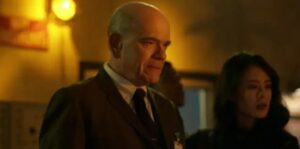
His first episode was called “F.O.B.,” a reference to a “Friend of Bill” Clinton who wanted to enlist the firm on a project for the then-new President. The firm were naturally excited to possibly be working for the White House (it all turned out to be a scam in the end). However, before going any further, Senior Partner Leland McKenzie (Richard Dysart) first gave a speech to his partners admonishing them for getting distracted, and that they would all have to first commit to getting back to basics and concentrating only on the LAW going forward, and that he wanted all of the partners to see him by 5pm to either agree to commit only to the firm or to resign.
This was a direct shot at the plots of Masius and Tinker, which saw Arnie Becker (Corbin Bernsen) become the head of a movie studio and Douglas Brackman (Alan Rachins) become obsessed with turning his autobiography into a film.
In the end, they all agree, with Arnie revealing that he hated his studio job, because he felt like he didn’t really understand, but he knew he understood the law (a big stretch that a guy would give up a movie studio head gig to be a divorce lawyer, but hey, whatever).
Okay, folks, if you have suggestions for a future Drawing Crazy Patterns, drop me a line at brian@popculturereferences.com!




Redo La Law with David Kelly in charge. It’s time for a reboot and for Kelley to do something high quality again instead of these novel adaptations. Thing is Kelly belongs telling original stories.
This is a fascinating dive into the meta-narrative of *L.A. Law*! It’s always intriguing to see how creative teams navigate changes, especially when a new showrunner takes the reins and decides to address past storylines head-on. The idea of a show literally tearing itself apart to rebuild is bold and makes for compelling television history. I’m really curious to learn more about how this played out and the audience’s reaction at the time. It reminds me of the intricate details you often have to consider when working through complex scenarios, much like using a ba 2 plus calculator online for financial modeling. Great topic!
This is a fascinating dive into the behind-the-scenes drama of *L.A. Law*! It’s always intriguing to see how new showrunners shape a series, especially when they tackle previous storylines head-on. The “meta-messages” concept is brilliant for exploring these creative shifts. I’m definitely going to check out more from Block Poster after reading this insightful piece. Thanks for shedding light on such an iconic show!
This is such a fascinating deep dive into the behind-the-scenes drama of *L.A. Law*! The idea of a new showrunner actively critiquing previous storylines within the show itself is wild and really speaks to the creative power struggles that can happen. It makes me want to rewatch those episodes with fresh eyes, looking for those meta-messages. Thanks for sharing this insightful piece; it’s a brilliant way to explore TV history, reminding us that even the most acclaimed shows have their internal battles. It’s almost like needing a square feet calculator to measure the impact of such a bold creative decision!
This is such a fascinating deep dive into the behind-the-scenes dynamics of *L.A. Law*! The idea of a showrunner literally deconstructing previous plotlines through their characters is pure gold, and definitely a “meta-message” worth exploring. I love how you highlight David E. Kelley’s significant influence even before he officially took the reins. It makes you wonder how often these creative power struggles play out in television. I’m always looking for insights like this, and you can often find more great discussions on the craft of storytelling at AI Rumpelstiltskin.
This is a fascinating dive into the behind-the-scenes drama of *L.A. Law*! I love how you highlight the “meta-messages” concept—it’s so true how creators often subtly comment on previous work. David E. Kelley taking the reins and immediately shaking things up is classic showrunner power play, and it’s always interesting to see how those shifts impact a show’s trajectory. Thanks for sharing this piece of TV history; it makes me want to revisit some old episodes! It’s almost like you’ve used some kind of Image to Line Converter to dissect the show’s narrative changes.
This is a fascinating dive into the behind-the-scenes drama of *L.A. Law*! It’s always intriguing to see how new showrunners shape a series, especially when they tackle previous storylines head-on. The idea of a show “tearing itself apart” is a compelling hook, and knowing David E. Kelley’s impact makes me want to revisit those episodes. It makes me wonder about other shows where a creative shift led to such meta-commentary, almost like the show itself became a Cartoon Video Generator of its own history! Great read.
This is such a fascinating look behind the scenes of *L.A. Law*! I remember enjoying the show, but I never knew about the internal creative tensions and how a new showrunner would overtly critique previous storylines. It makes you wonder how often that happens in TV! This piece really highlights the complex dynamics of show production. Thanks for sharing this gem – it’s a great example of those “meta-messages” you explore. Speaking of breaking things down, sometimes I use an Image Splitter for creative projects, which feels a bit like dissecting a show’s narrative beats.
This is such a fascinating deep dive into the behind-the-scenes drama of *L.A. Law*! I never knew about the showrunner transitions and how David E. Kelley essentially took over while publicly critiquing previous storylines. It’s always intriguing to learn about those “meta-messages” where creators subtly (or not so subtly) comment on the work that came before them. It makes you wonder how often this happens in other shows without us even realizing it! Thanks for shedding light on this unique aspect of television history; it really adds another layer to appreciating these classic series. I’m always looking for ways to Combine Image the pieces of a show’s production story, and this article delivered!
This is such a fascinating deep dive into the behind-the-scenes drama of *L.A. Law*! It’s always intriguing to see how creative differences and changes in showrunners impact a series, especially when it leads to characters openly critiquing past storylines. David E. Kelley’s influence on the show was undeniably huge, and it’s wild to think about the transition happening so visibly on screen. Thanks for shedding light on these “meta-messages” – it really adds another layer of appreciation for TV history. For anyone interested in the long-term impact of creative decisions, understanding how these early TV moments played out can be just as complex as calculating future value with a TVM Calculator!